
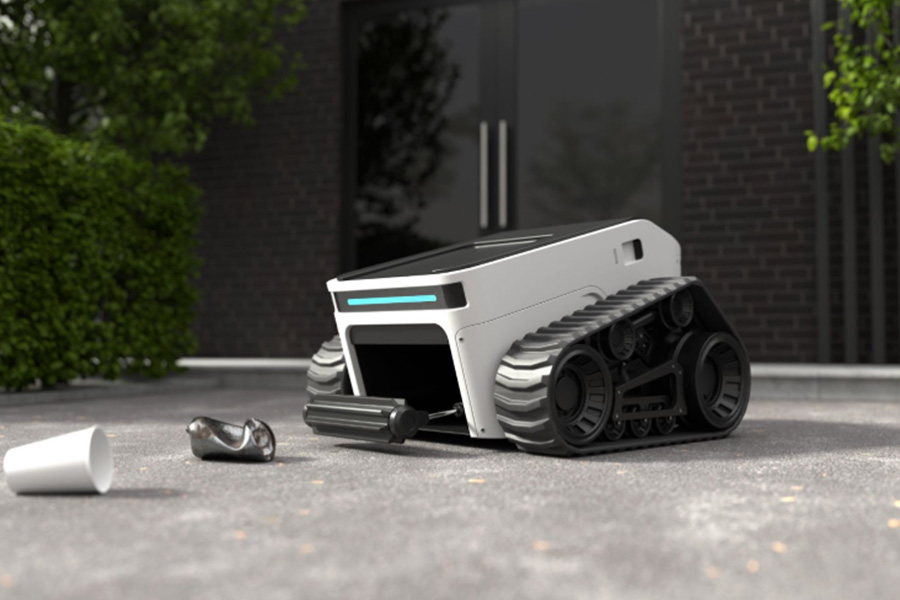
The integration of a security robot in the city-state represents a significant leap forward in surveillance and asset protection, offering a mobile, intelligent layer to a traditional smart security system. These autonomous machines, ranging from ground-based patrol units to aerial drones, dramatically enhance an organisation’s security posture through continuous monitoring, anomaly detection, and real-time response capabilities.
However, deploying such sophisticated technology within this densely regulated environment necessitates a careful consideration of compliance obligations and the paramount importance of data security. Failure to address these legal and technical intricacies can expose organisations to hefty penalties and reputational damage, making a proactive, informed approach essential for successful implementation. After all, the sheer volume and sensitivity of the data collected by these robots, including personal data, spatial mapping, and incident reports, places them squarely under the purview of strict privacy laws.
The PDPA and Data Governance
The primary piece of legislation governing data handling in the city-state is the Personal Data Protection Act (PDPA). Since security robots are inherently data-gathering tools, their operation must strictly adhere to the PDPA’s core principles of Consent, Purpose, and Reasonableness. Every piece of personal data, such as high-resolution images of faces, license plates, or audio recordings of conversations, collected by a security robot in Singapore must be collected for a legitimate and clearly defined purpose, and organisations must make reasonable efforts to obtain consent or rely on valid exceptions, such as the ‘legitimate interests’ exception which typically applies in security contexts, provided it’s properly balanced against the individual’s rights. The use of prominent signage to notify individuals that a robot is collecting data, where and how they can access the privacy policy, and who to contact for data inquiries are non-negotiable requirements to ensure transparency and accountability.
Beyond collection, the PDPA mandates that data should be protected from unauthorised access, disclosure, or modification, requiring robust encryption and access controls throughout the data lifecycle, from the robot’s onboard storage to the central server.
Securing the Data Pipeline and the Robotic Management System
The operational architecture of a smart security system that includes autonomous robots involves a complex data pipeline: data is captured by the robot, often processed on the edge, and then transmitted via Wi-Fi or cellular networks to a central command centre, governed by a robotic management system (RMS). Each point in this chain represents a potential vulnerability. Data must be encrypted both in transit (e.g., using TLS/SSL) and at rest (e.g., AES-256 encryption on internal hard drives) to mitigate this risk. The RMS is the brain of the operation, handling critical functions like mission planning, remote control, data aggregation, and access management.
Consequently, the RMS must be protected with the highest level of cybersecurity measures, including multi-factor authentication for all operators, strong password policies, regular security patching, and comprehensive intrusion detection systems. Furthermore, network segmentation is critical; the robot network should be logically separated from the primary corporate network to contain any potential breach. This approach includes requesting segregated data from the chosen smart security system provider. Organisations should also perform regular penetration testing on the robot hardware and the RMS software to identify and remediate zero-day vulnerabilities before they can be exploited.
Operational Compliance and Accountability in Incident Response
Compliance extends beyond the technical configuration to the operational deployment of the security robot. This phase includes adherence to specific regulatory requirements governing noise, trespass, and surveillance. For instance, any operation involving drone robots will require strict compliance with the Civil Aviation Authority of Singapore (CAAS) regulations, including permits for aerial photography and flight zones. Critically, the PDPA’s accountability principle requires that the organisation must take responsibility for the data, even if a third-party vendor manages the robots or the robotic management system. This requirement means the security contract must clearly define the data processing roles, responsibilities, and incident response protocols, ensuring that any data breach involving the robot is immediately reported to the organisation and, if required, to the Personal Data Protection Commission (PDPC).
Given the mobility of these assets, clear Standard Operating Procedures (SOPs) must be in place for when a robot is damaged, stolen, or malfunctions, ensuring its internal data storage is physically secure or can be remotely wiped. The records generated by the robot, such as audit logs and patrol reports, are also essential for demonstrating compliance and providing an unbiased record during security investigations, solidifying the robot’s role as a trusted component of the smart security system.
The effective deployment of a security robot is a delicate balancing act, leveraging cutting-edge technology to enhance security while strictly maintaining compliance with one of Asia’s most robust data protection frameworks. Organisations must embed privacy-by-design principles into the entire architecture, from the sensor to the robotic management system. A commitment to robust encryption, continuous monitoring of the smart security system, and comprehensive operational transparency is not just good practice but a fundamental legal requirement for safeguarding both assets and personal data in the digital age.
Contact KABAM Robotics and let us help you integrate autonomous surveillance securely.